



Since Xi Jinping’s last state visit to the US in 2015, China has become a central target in Washington’s trade policy and last year’s “Liberation Day” is only the most obvious action. China’s retaliation and the Iran conflict have made the US position much weaker than in early 2025 and both governments now have incentives to make the truce a more durable agreement, but remain divided.
AI is the unexpected guest. With models ever more powerful, the public is now concerned by the risks the technology is posing. This gives reason for cooperation as China is often invoked as the main reason why it is impossible for the labs to slow down. A credible agreement would make that argument weaker.
Our five forecasts examine what the summit is likely to deliver on trade, AI and Taiwan.
Will the export-control truce be extended, and for how long?
Why it matters
The duration of the truce affects access to critical minerals and advanced technology, which has consequences for manufacturing costs, supply chains and business investment. A longer extension would give businesses more planning certainty while a short one would make them exposed to renewed confrontation.
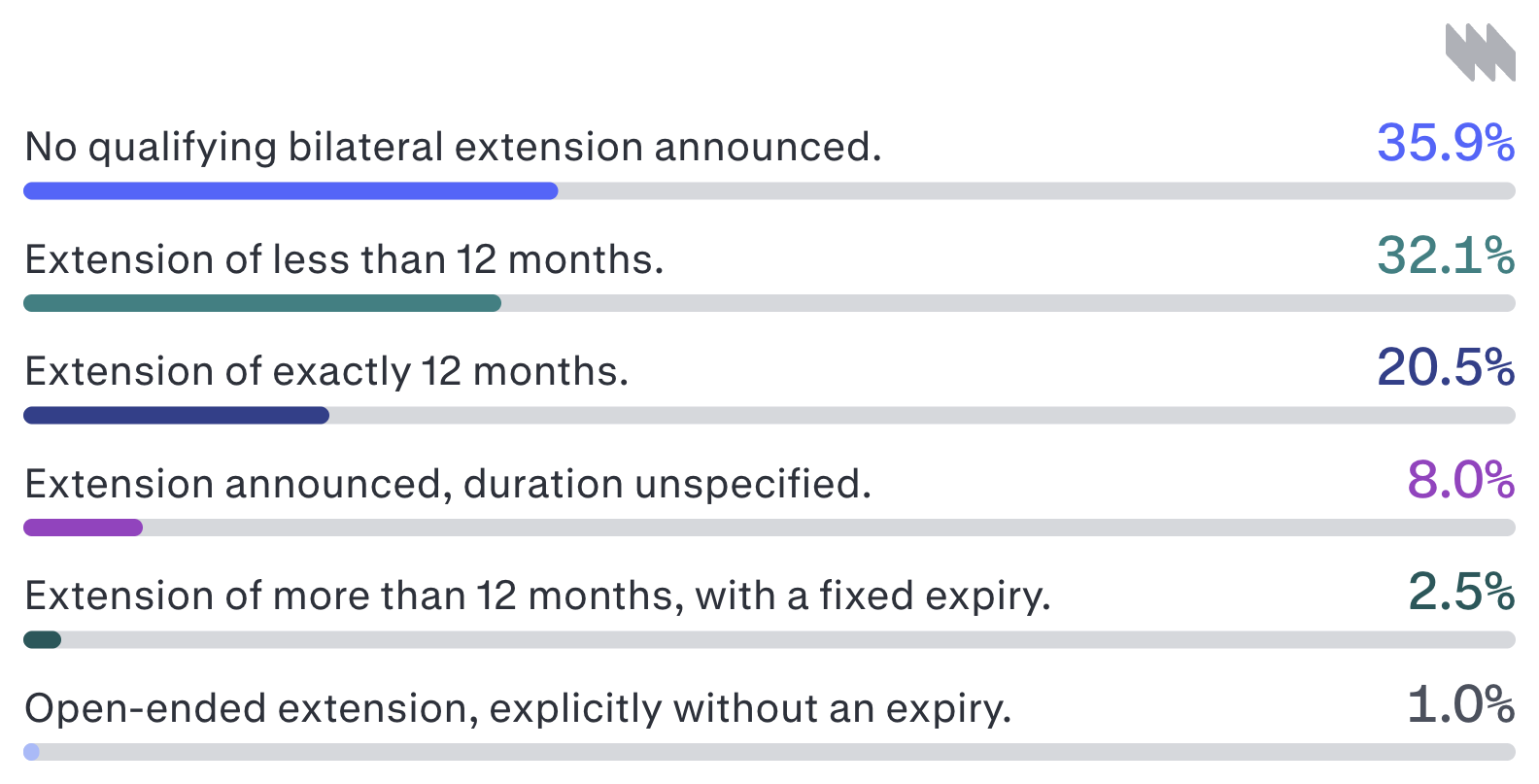
Preparatory talks remained split three days before the summit, with Washington publicly offering three to six months while Beijing sought over two years, and the November expiration allows both sides to continue negotiating.
Weighed against the impasse, pre-summit analyst expectations and the precedent of the 2025 Busan agreement supported an extension of exactly 12 months as a natural compromise.
One model favoured an extension of less than 12 months based on Washington’s live offer, whereas the other placed the most weight on no qualifying announcement within the September window.
The main remaining uncertainty is whether the leaders bridge the duration dispute during the summit or issue a general political statement that leaves legal terms for both suspensions unspecified.
Will both countries cut tariffs?
Why it matters
Since Liberation Day, tariffs have had a negative impact on both countries, albeit for different reasons. Farmers, manufacturers but also consumers in general have been especially hit in the US. For Trump, a positive announcement could also help sway impacted voters in the coming midterms.
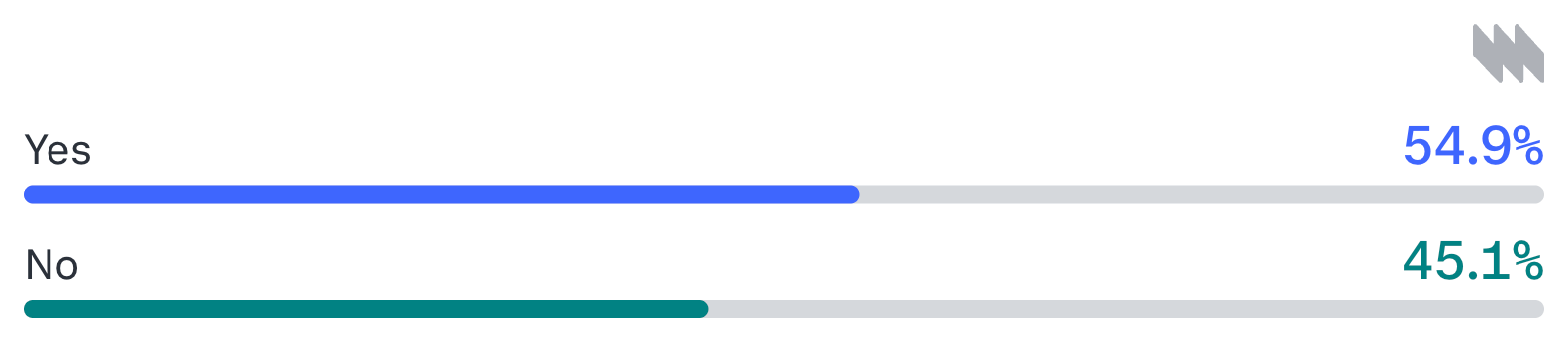
Negotiations over a symmetric 30 billion dollar reciprocal tariff package covering US energy and agriculture alongside Chinese manufacturing inputs, potentially applying most-favored-nation rates, provide concrete momentum for a bilateral deal.
Against this, past summits often produced only vague framework language, and historical research shows zero of 15 comparable high-level US-China trade negotiations met such strict specificity criteria.
The models diverged on the September 20 preparatory talks: one estimated a 65% chance of agreement based on technical readiness, while the other leaned toward No at 45% because negotiators still had not finalized a product list.
The principal remaining uncertainty is whether any summit announcement publishes explicit bilateral rate cuts below current levels by September 30, rather than defaulting to purchase pledges, truce extensions, or deferred frameworks.
Will AI talks get a concrete agenda?
Why it matters
AI risks have recently become mainstream with many labs asking for help from the government to allow them to pace the speed of progress. An agreed agenda would give the two governments a concrete process for addressing these risks and the labs an horizon to look towards to pace the advances of artificial intelligence.
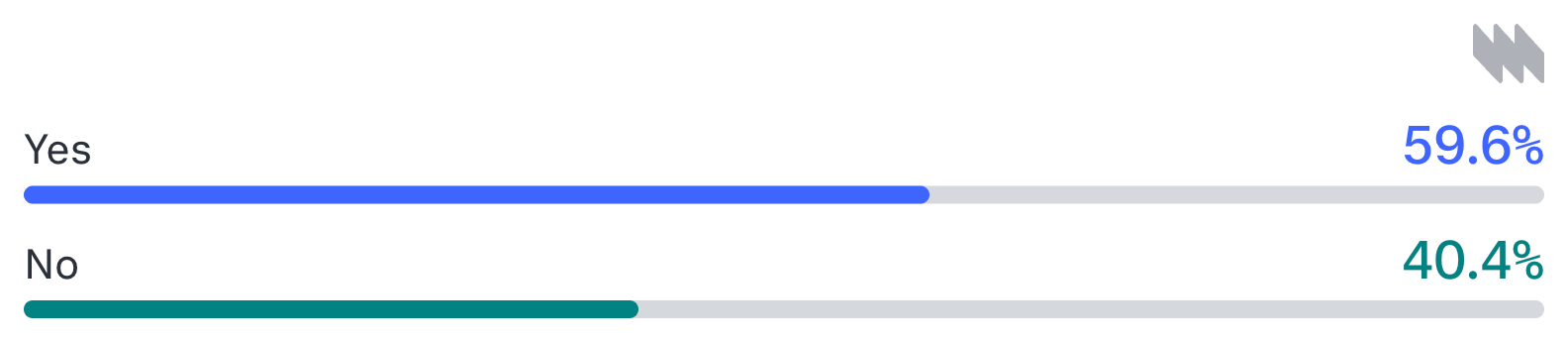
Preparatory talks between US Treasury Secretary Scott Bessent and Vice Premier He Lifeng on September 20 already identified the bilateral leads and agreed on a dialogue with a Shenzhen follow-up.
Current public statements propose an AI incident-notification mechanism without explicitly naming an enumerated hazard like cyberattacks, though an uncontradicted US statement during the summit window would suffice.
Weighing against an explicit agreement, both leaderships have political reasons to avoid threat framing, and only two of five summit-linked channel announcements since 2016 specified both counterparts and an agenda.
The main remaining uncertainty is whether official summit releases will explicitly enumerate qualifying risks like cyberattacks or military escalation, rather than relying on generic national-security incident phrasing.
Will the summit produce a specific AI safeguard?
Why it matters
A concrete joint safeguard could reduce a shared danger, such as AI-enabled cyber misuse or military escalation. There is now a concrete proposal: on September 20, Bessent proposed notifications for AI incidents affecting national security but China’s acceptance remains unclear. This would show whether cooperation can move beyond statements and meetings while the two countries continue to compete in AI.
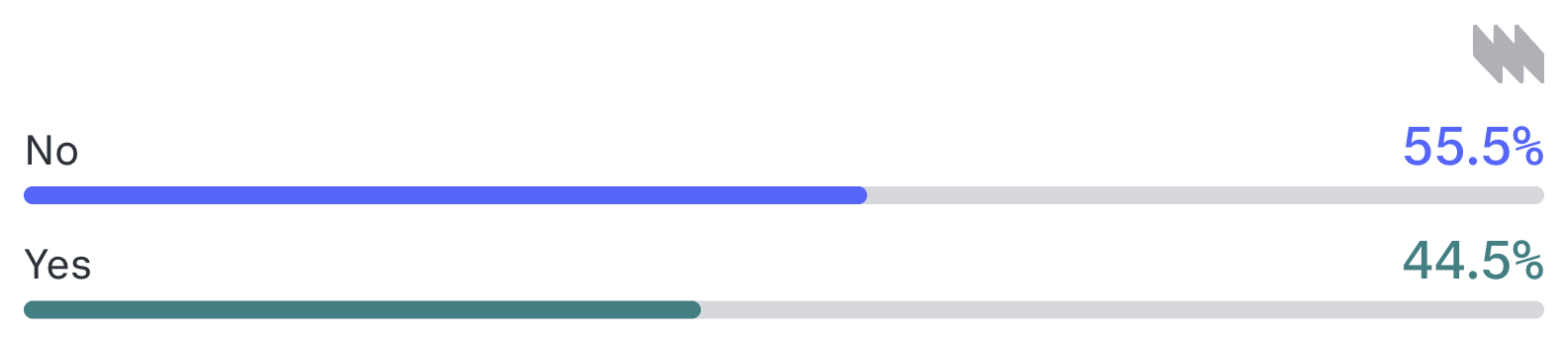
Preparatory negotiations placed a concrete AI incident-notification mechanism on the table, which directly matches qualifying examples in the criteria and could be satisfied even by an uncontradicted unilateral assertion.
However, Chinese readouts acknowledged only general AI dialogue without endorsing the proposal, and merely continuing or operationalizing the dialogue agreed upon in May 2026 is explicitly excluded from qualifying.
Historical precedent also tempers expectations, as only one of five comparable security meetings produced concrete risk-reduction deliverables, while both leaders’ public postures emphasize technological dominance over safety constraints.
The primary remaining uncertainty is whether China will privately accept the notification mechanism at the summit, and whether the final joint wording establishes a specific operational commitment rather than vague intentions.
Will the US commit to restricting arms sales to Taiwan?
Why it matters
Taiwan could be more lightly affected, e.g. with delays, but an explicit restriction would mark a stark change in US policy, affecting Taiwan’s access to defense capabilities and how it plans for its security. That, in turn, would send a worrying signal to China and to Asia-Pacific as a whole on the reliability of the US in the region.
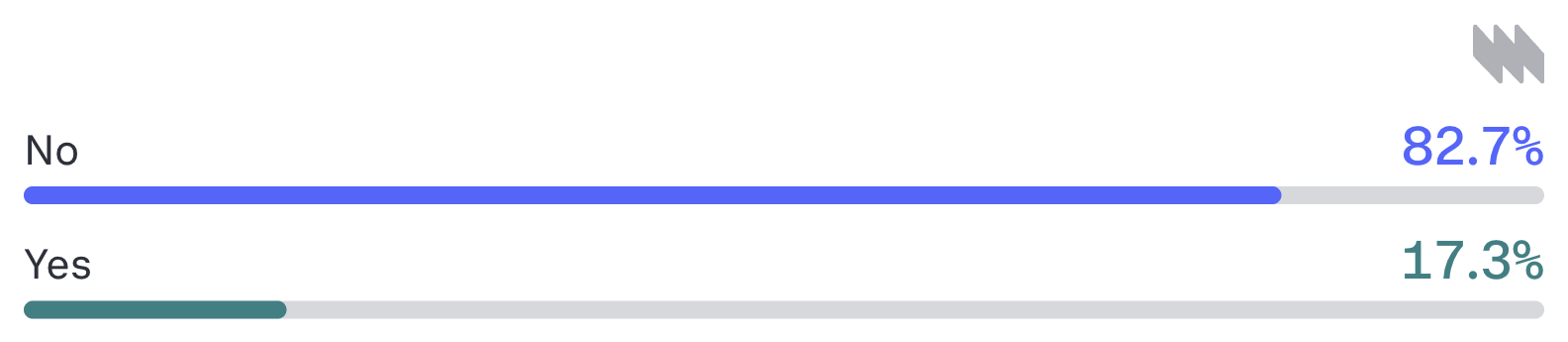
Reports indicate the administration is weighing a quiet postponement of pending Taiwan arms sales past the summit, while official testimony denies linkage to China talks and previews center on trade and AI.
While ten bilateral leader summits since 2013 yielded no qualifying public arms restrictions, Trump’s May 2026 remarks describing a $14 billion package as a negotiating chip held in abeyance provide a concrete precedent.
The primary remaining uncertainty is whether Trump makes an unscripted statement that establishes a genuinely new commitment to delay or restrict sales rather than merely reiterating existing policy.