
Friday Forecasts is a weekly series showcasing 5 forecasts directly from Mantic, which you can explore on the Mantic platform with the direct link in the question titles.
1. The number of House seats Republicans win in the 2026 midterms ↗
Democrats lead the generic ballot by about 7 points with Trump’s approval near 38%, yet redistricting across states means they still need a 3 to 4 point margin to take the chamber. It raised the floor without changing the ending. Explore on Mantic ↗
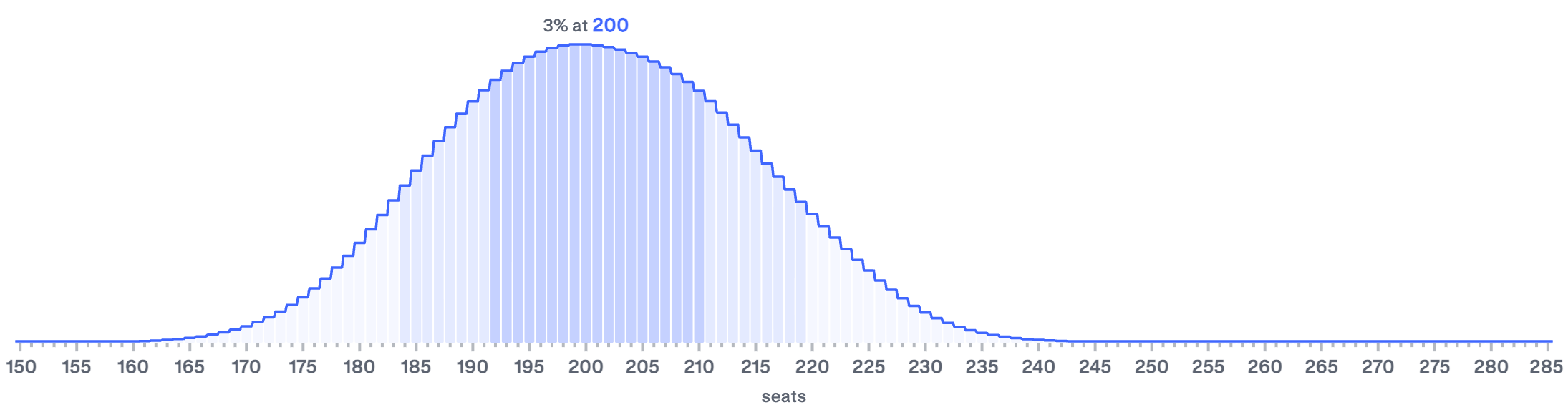
Republicans entered the cycle defending a narrow majority of 220 seats won in November 2024, meaning a net loss of just three seats hands control to Democrats.
National generic ballot polling shows Democrats leading by margins between 5.7 percentage points and 8.1 percentage points, creating an adverse national wave environment for the incumbent party.
President Donald Trump faces deeply underwater approval ratings of 35% to 39%, driven by public dissatisfaction with inflation and the ongoing conflict with Iran that began on February 28, 2026.
Mid-decade redistricting across ten states created a net increase of 12 Republican-leaning seats and shifted the median district to Cook PVI R+3, providing a structural cushion that prevents a collapse on the scale of 2010 or 2018.
The official resolution excludes independents who caucus with Republicans, which deducts Kevin Kiley of California from the official Republican tally if he wins as an independent and sets my expectation slightly below raw market indices.
2. Republican House seats conditional on the timing of the Fed’s next hike ↗
August inflation at 3.4%, payrolls up 162,000 and three July dissents put futures near 90% for a September hike. How much does a pre-election hike punish the incumbent party? Our forecaster believes this would cost the Republicans 5 additional seats. Explore on Mantic ↗
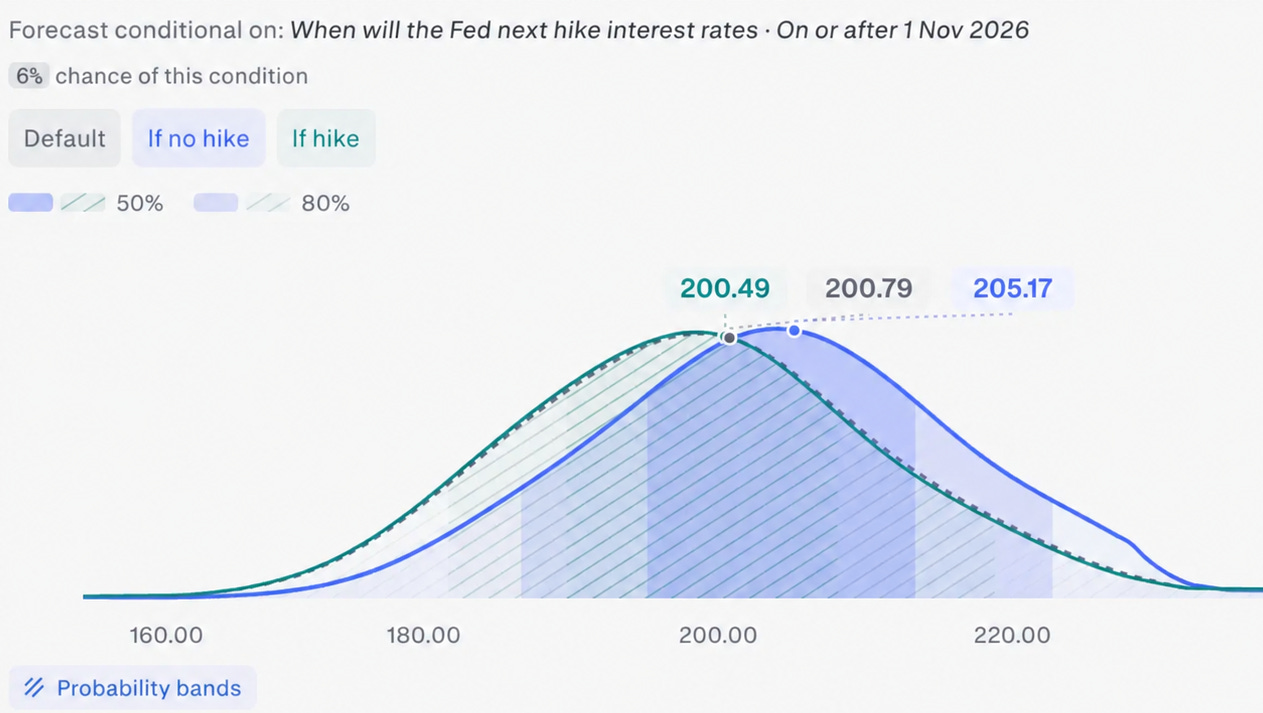
If the Fed hikes before 1 November, the critical pivot in my thinking is conditioning on an interest rate hike occurring shortly before the election. Against a backdrop of depressed consumer sentiment and persistent inflation concerns, a late monetary tightening acts as an overt signal of economic distress.
I determined this would sharpen voter dissatisfaction with the incumbent party, creating an additional electoral drag, so I shifted the distribution toward lower Republican totals and treated a sustained Republican majority as an improbable upper-tail scenario.
If the hike instead lands on or after 1 November, taking the absence of a pre-election interest rate hike into account merely confirms my baseline economic backdrop without providing a strong catalyst either way, leaving a balance between a sizable wave loss and map-insulated retention.
In both branches the baseline assessment rests on generic congressional ballot polling, current presidential approval ratings, prediction markets and nonpartisan race raters. Midterms historically penalize the party holding the White House, especially when executive approval is low, and national polling aggregates point toward strong Democratic momentum.
I tempered expectations of a complete historical wipeout by accounting for structural cushions: recent mid-decade redistricting has created a more favorable baseline for Republicans, shifting the median congressional district to the right and providing a defensive floor in several tossup races.
Professional handicappers and race-by-race models reflect this dynamic by projecting a more resilient defense than national polls alone would indicate, which is why an unfavorable national voting environment translates into fewer lost seats than historical wave elections might suggest.
3. Starship Flight 14 achieves orbit ↗
Thirteen flights, none to orbit on purpose, and Flight 13 already relit a Raptor in space in July. The largest risk on 22 September is not an explosion but SpaceX’s own rule: controllers skip the insertion burn unless the ship can prove it could deorbit. Explore on Mantic ↗
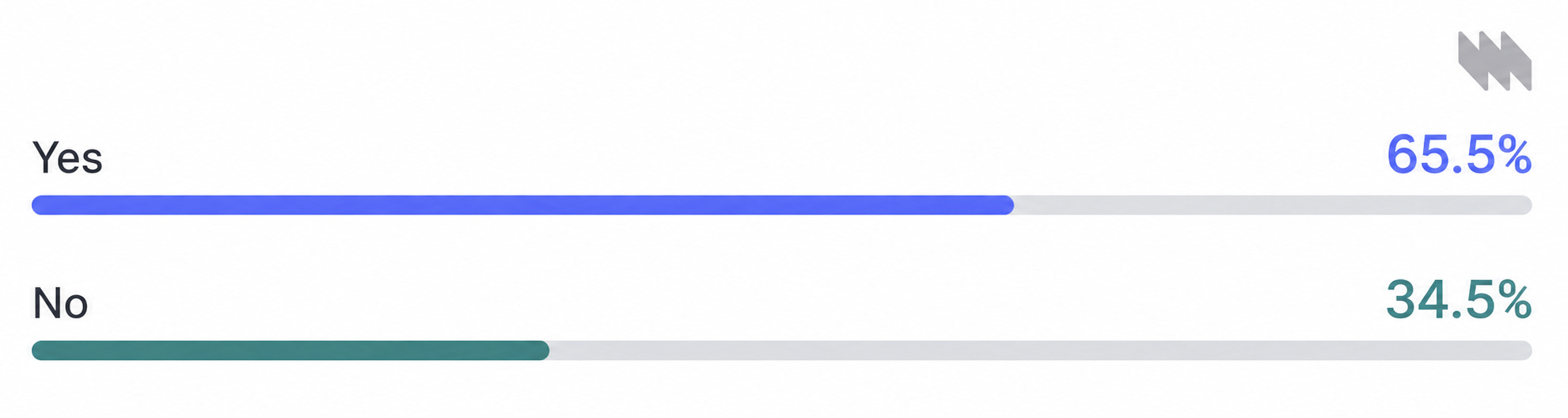
SpaceX has scheduled the launch for September 22, 2026, during a 75-minute window opening at 12:15 UTC from Starbase, Texas, marking the program’s first intentional orbital insertion attempt.
The flight profile plans an initial ascent followed by a 19-second orbital insertion burn around 25 minutes after liftoff, inserting the upper stage and 26 Starlink V3 satellites into an altitude of approximately 275 km.
The vehicle upper stage demonstrated the core propulsion requirements on Flight 13 on July 24, 2026, including nominal ascent cutoff, payload bay deployment, and a successful 14-second in-space Raptor relight.
The remaining 34% probability of failure reflects strict mission commit criteria where flight controllers will only execute the insertion burn if they verify sufficient redundancy for a subsequent deorbit burn, as well as the historical failure risks inherent in maiden orbital attempts for new rocket architectures.
4. When the Paramount–Warner Bros. Discovery merger closes ↗
Every regulator has cleared this, the DOJ included, so the $111bn deal now turns entirely on twelve state attorneys general in one Oakland courtroom. Trial starts 2 March 2027, and Paramount pays $7m a day from 1 October just to wait. Explore on Mantic ↗
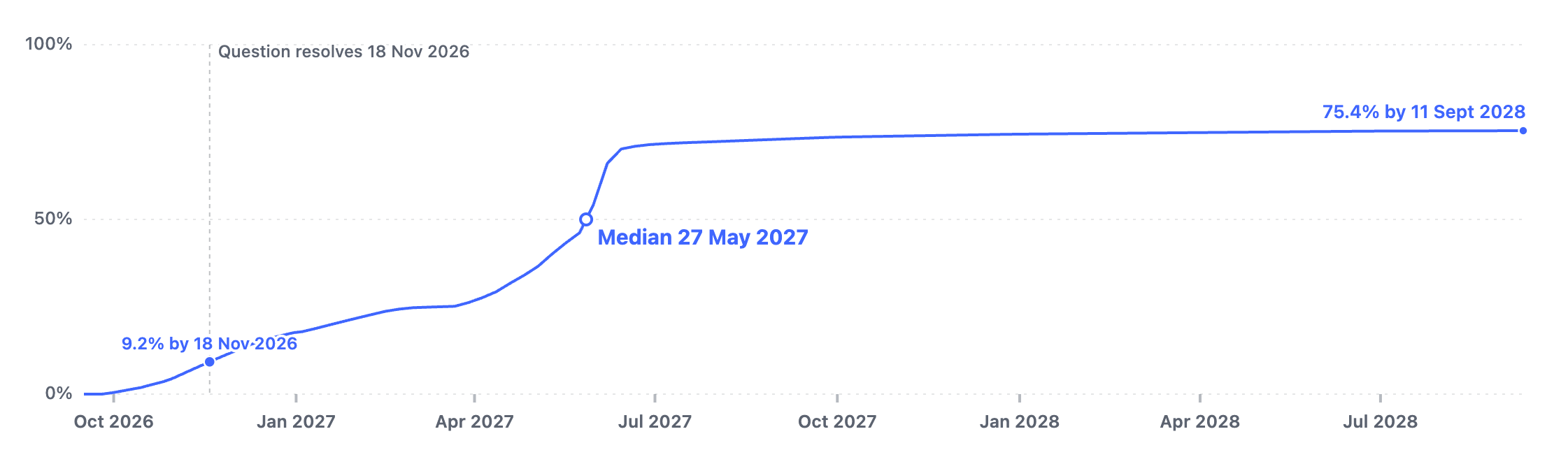
Consummation is currently blocked by a binding joint stipulation filed on July 24, 2026 in the U.S. District Court for the Northern District of California, which establishes that the transaction will not close until the earlier of five days after the merits determination or June 1, 2027.
U.S. District Judge Araceli Martinez-Olguin has scheduled a 12-day bench trial running from March 2, 2027, through March 19, 2027, following a final pretrial conference on February 24, 2027, with post-trial briefing extending into April 2027.
A merits decision issued in mid-to-late May 2027 represents the most likely procedural pathway to satisfy the five-day closing condition under the stipulation, fitting inside the merger agreement outside date which automatically extends to June 4, 2027.
All government agency approvals have been secured worldwide, including clearance from the U.S. Department of Justice on June 12, 2026, the European Commission on July 22, 2026, the United Kingdom Competition and Markets Authority on August 6, 2026, and Mexican regulators on August 14, 2026, leaving only state and guild litigation.
Current prediction market pricing aligns with this calendar, assigning only a 21% likelihood to a closing by December 31, 2026, while pricing a 72% probability that Paramount completes the acquisition by June 30, 2027.
5. The IEA forecast for global electricity demand growth in 2027 ↗
The agency’s mid-year update already had demand growth accelerating from 3.0% in 2025 to 3.6% this year, with data centres going from 485 to 950 TWh by 2030. This is where the AI build-out stops being a narrative and becomes a published number. Explore on Mantic ↗
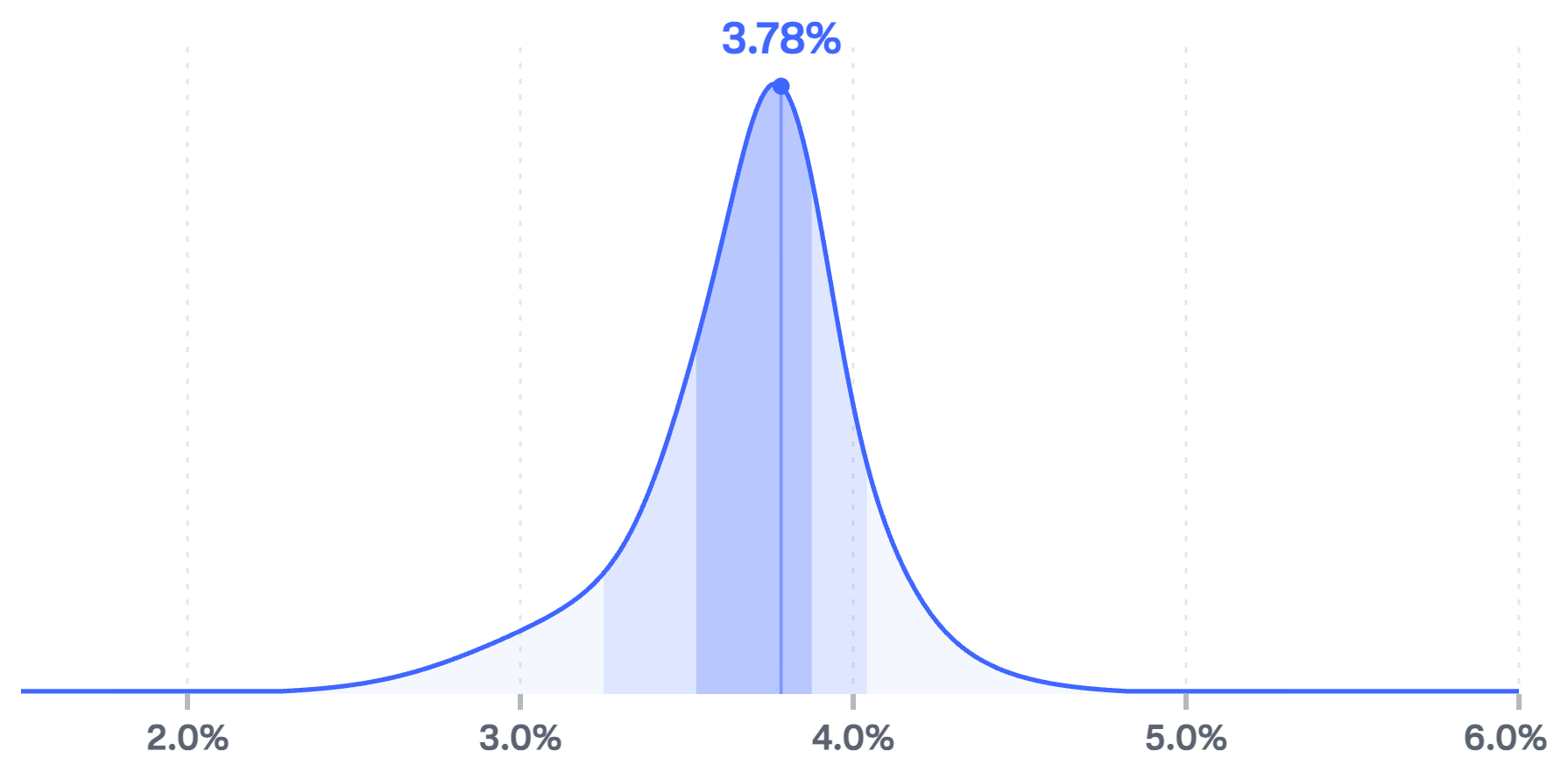
The baseline for this forecast is established by the agency’s Electricity Mid-Year Update 2026, published on 23 July 2026, which projected worldwide electricity demand to grow by 3.8% in 2027, accelerating from 3.6% in 2026 and 3.0% in 2025.
Structural tailwinds support robust growth into 2027, with total consumption projected to rise from 28,600 TWh in 2025 to 30,700 TWh by 2027, driven by electric vehicles, heat pumps, air conditioning, and data centers expanding from 485 Terawatt-hours (TWh) in 2025 to 950 TWh by 2030.
Macroeconomic conditions provide an upward demand impulse, with global gross domestic product growth projected by the International Monetary Fund to strengthen from 3.0% in 2026 to 3.4% in 2027.
Counteracting upside factors, geopolitical conflict in the Middle East caused the loss of nearly 20% of global LNG supply through the Strait of Hormuz, with damage to Qatari infrastructure eliminating 17% of its LNG export capacity and triggering power curtailments in Pakistan and Bangladesh.