


Friday Forecasts is a weekly series showcasing 5 forecasts directly from Mantic, which you can explore on the Mantic platform with the direct link in the question titles.
1. The number of seats the Republican Party holds in the U.S. House of Representatives after the 2026 midterm elections ↗
The war with Iran and a slowing economy have dragged Trump’s approval to a record-low 34%, and Democrats now lead the generic ballot by six points. Redrawn maps give Republicans a cushion, but how deep do the losses run? Explore on Mantic ↗
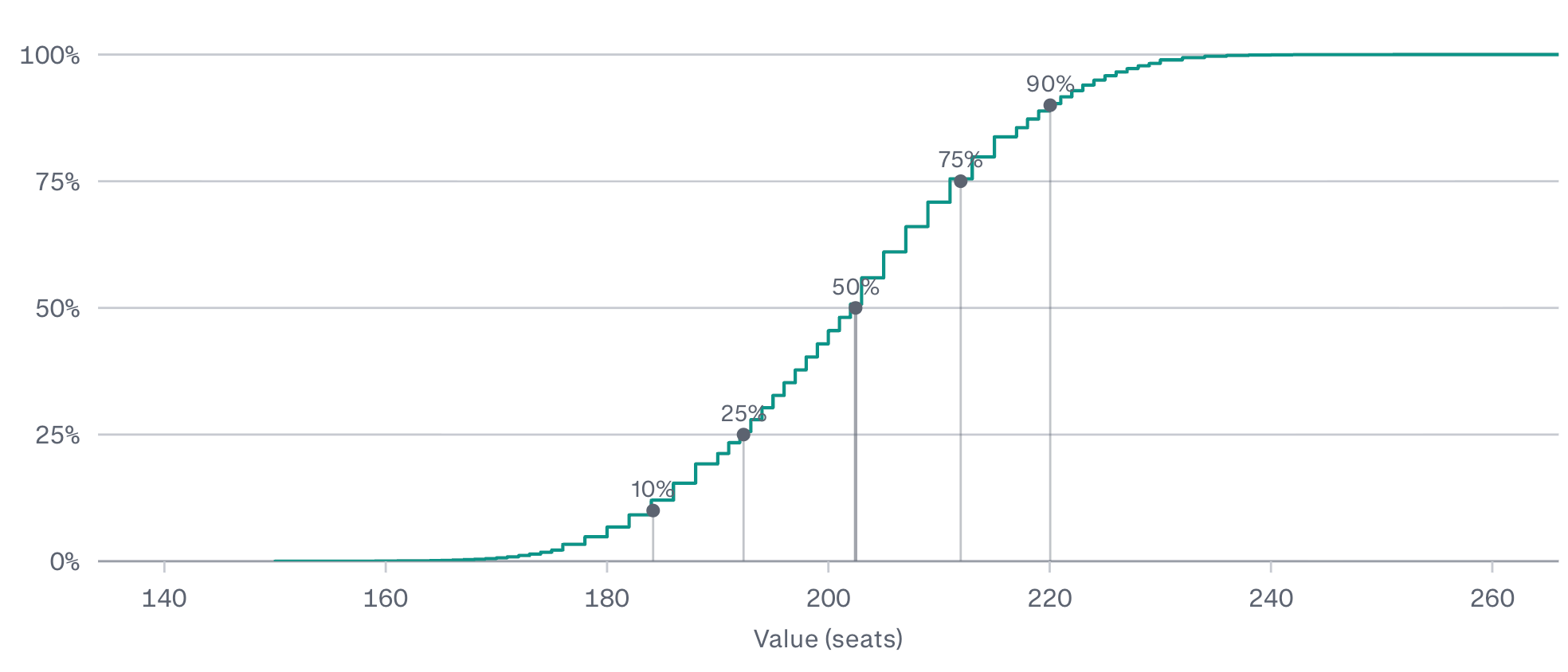
My most likely prediction for the number of seats won by the Republican Party in the 2026 midterm elections is 201.43, with a 50% chance of falling between 187.80 and 216.82.
I anticipate severe political headwinds will drive significant seat losses, as the party currently faces a record-low presidential approval rating of 34% and a slowing economy where second-quarter GDP growth dipped to 1.5%.
I expect the Republican Party to retain a structural floor despite these challenges, thanks to mid-decade redistricting that provided a net gain of 10 additional red-leaning seats in key states like Texas and Florida.
I have incorporated market signals and handicapper data showing a likely Democratic takeover, with Polymarket data and the Crystal Ball ratings suggesting Republicans will fall approximately 17 seats short of their current 220 seat baseline.
2. The number of seats of the Republican Party in the House of Representatives after the midterms conditional on the price of the WTI crude ↗
Oil is the fastest route from a foreign war to a domestic ballot, and voters feel it at the pump long before they see it in an inflation print. How much does the House forecast move if WTI hits $85? Explore on Mantic ↗
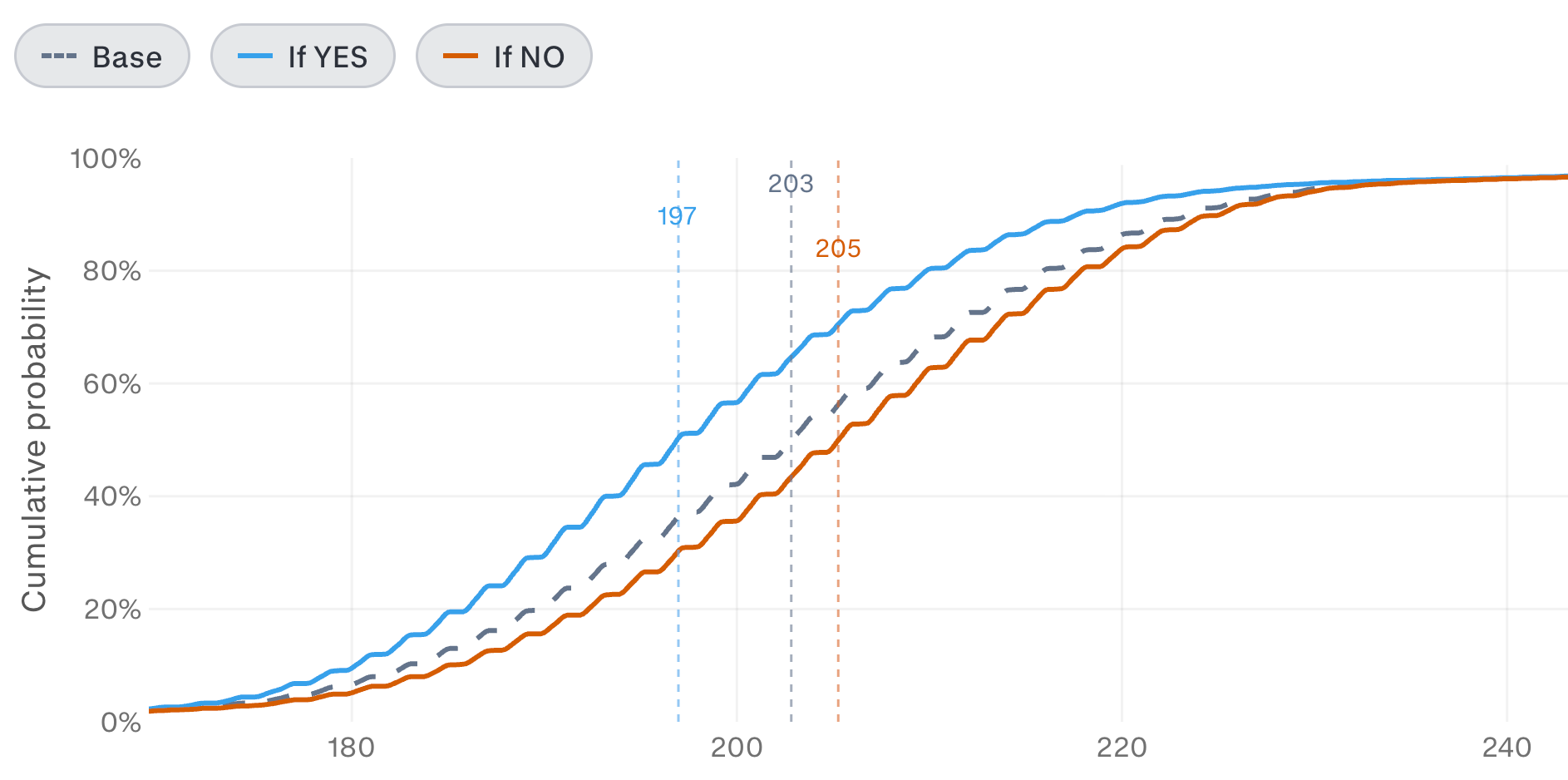
WTI Crude price: above $85
By conditioning my forecast on oil prices remaining elevated through late October, I assumed that voters would face persistent inflation and high costs at the pump leading directly into the election. This environment generally penalizes the incumbent party, as pocketbook issues are highly salient to undecided voters and can dampen turnout for the president’s base.
I analyzed the gains Republicans achieved through mid-decade redistricting, which created more favorable district lines in several states. I also factored in the party’s significant fundraising advantage and recent legal changes allowing for more coordinated campaign spending.
WTI Crude price: below $85
I reasoned that avoiding an energy-price shock shortly before the election would stabilize consumer sentiment and reduce the political damage caused by inflation. This economic stability acts as a brake on the opposition’s momentum, making a massive landslide against the incumbent party less probable. By combining these historical headwinds with the moderating effect of stable energy prices and redistricting advantages, I arrived at a forecast that balances the typical midterm disadvantage against these specific protective factors.
3. The amount of global insured losses from natural catastrophes in 2026 ↗
First-half losses came in at just USD 44 billion, some USD 22 billion below the five-year average, and a strengthening El Niño should keep the hurricane season quiet. Does the second half stay that calm? Explore on Mantic ↗
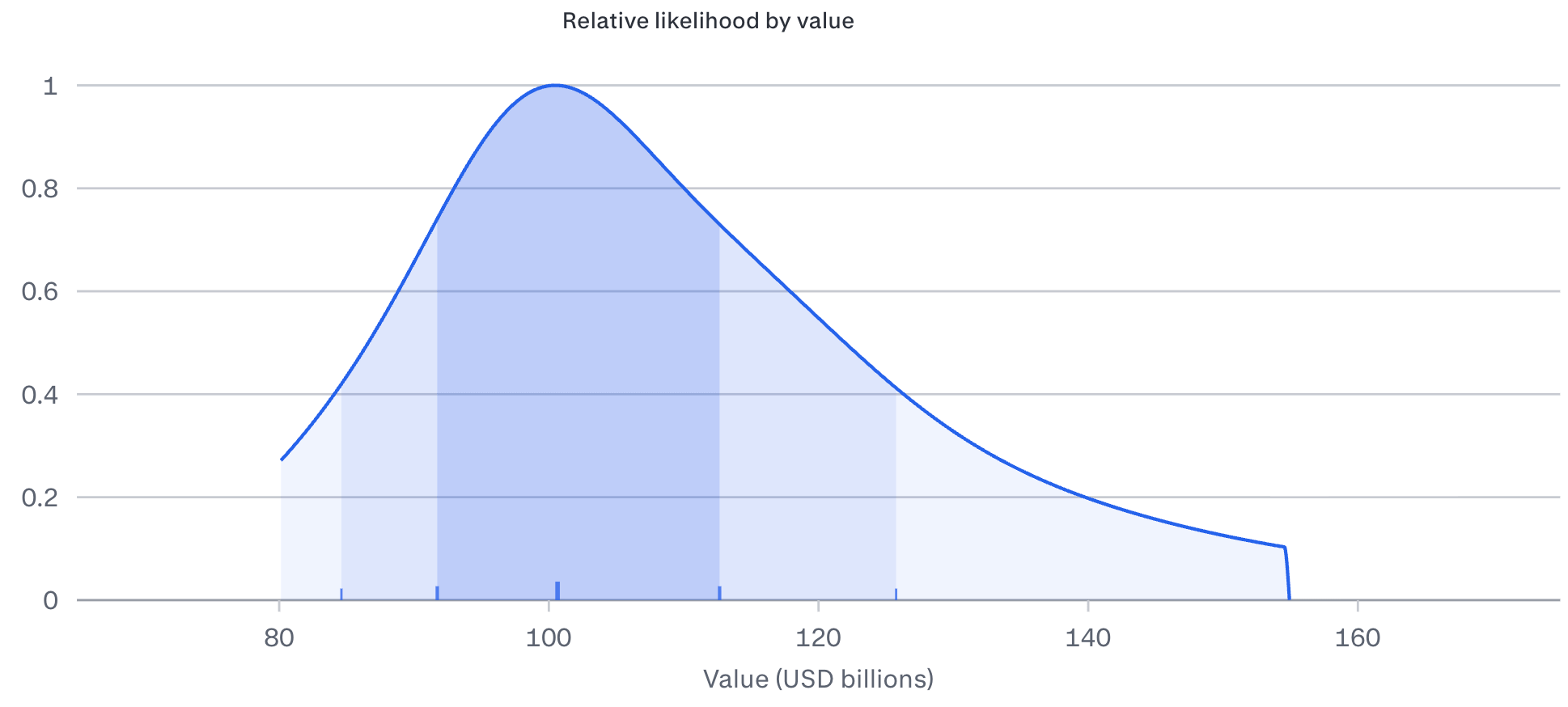
My most likely prediction for global insured natural catastrophe losses in 2026 is 100.64 USD billion, with a 50% chance of falling between 91.72 and 112.66 USD billion.
Actual losses for the first half of 2026 reached only USD 44 billion, tracking USD 22 billion below the five-year average for H1 and providing a favorable starting position for the annual total.
A strengthening El Niño is expected to suppress North Atlantic hurricane activity, with meteorological forecasts indicating a likely below-normal season that reduces the primary driver of catastrophic second-half payouts.
I anticipate that structural inflation, including a 60% rise in reconstruction costs and higher asset values, will keep the loss floor elevated even if major event frequency remains low.
I remain cautious of the “Super El Niño” peak in Q4, which creates significant risks in Asia-Pacific for typhoons and floods that could trigger the forecast upper-bound scenarios.
4. When Benjamin Netanyahu is no longer Prime Minister of Israel ↗
Israel votes on 27 October with Netanyahu’s bloc polling right on the edge of a majority. He could then become a caretaker PM or he may well hang on. When does he actually leave office? Explore on Mantic ↗
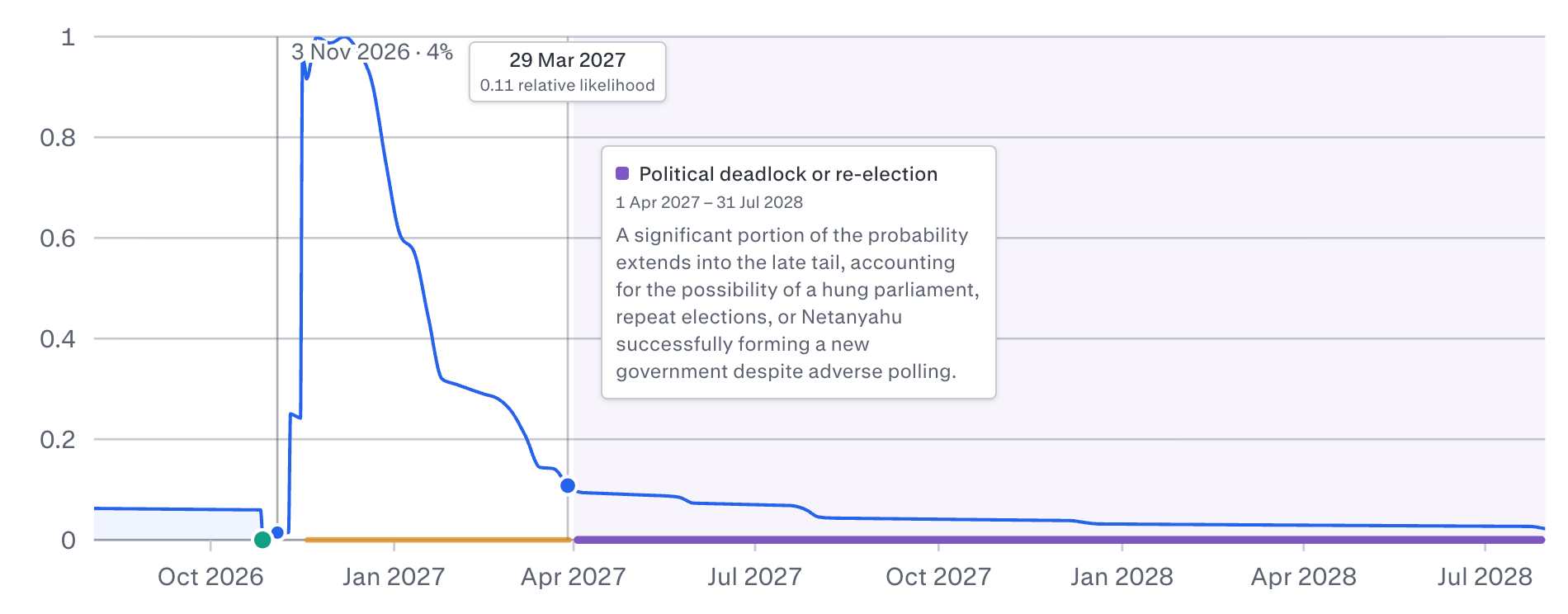
I predict Benjamin Netanyahu will cease to be the Prime Minister of Israel by January 1, 2027, with a 36% probability.
The primary driver for this forecast is the timing of the national election on October 27, 2026, which occurs just seven days before the resolution date. Israeli law dictates that a sitting prime minister remains in a caretaker capacity until a successor is sworn in, a process that has historically required a minimum of 20 days.
Although recent polls show Netanyahu’s bloc falling short of a majority with only 48 to 53 seats, the fragmented nature of the opposition makes an unprecedented one-week transition of power highly improbable.
The low probability of departure accounts for extreme outliers, such as a sudden medical emergency or an immediate resignation resulting from ongoing plea-deal mediation regarding his corruption trial.
5. When Safe Superintelligence (SSI) releases their first model ↗
An investor recently mentioned on a podcast that SSI would release their first model in August. CEO Ilya Sutskever had said in the past that they would not release any product before reaching a safe superintelligence. Explore on Mantic ↗
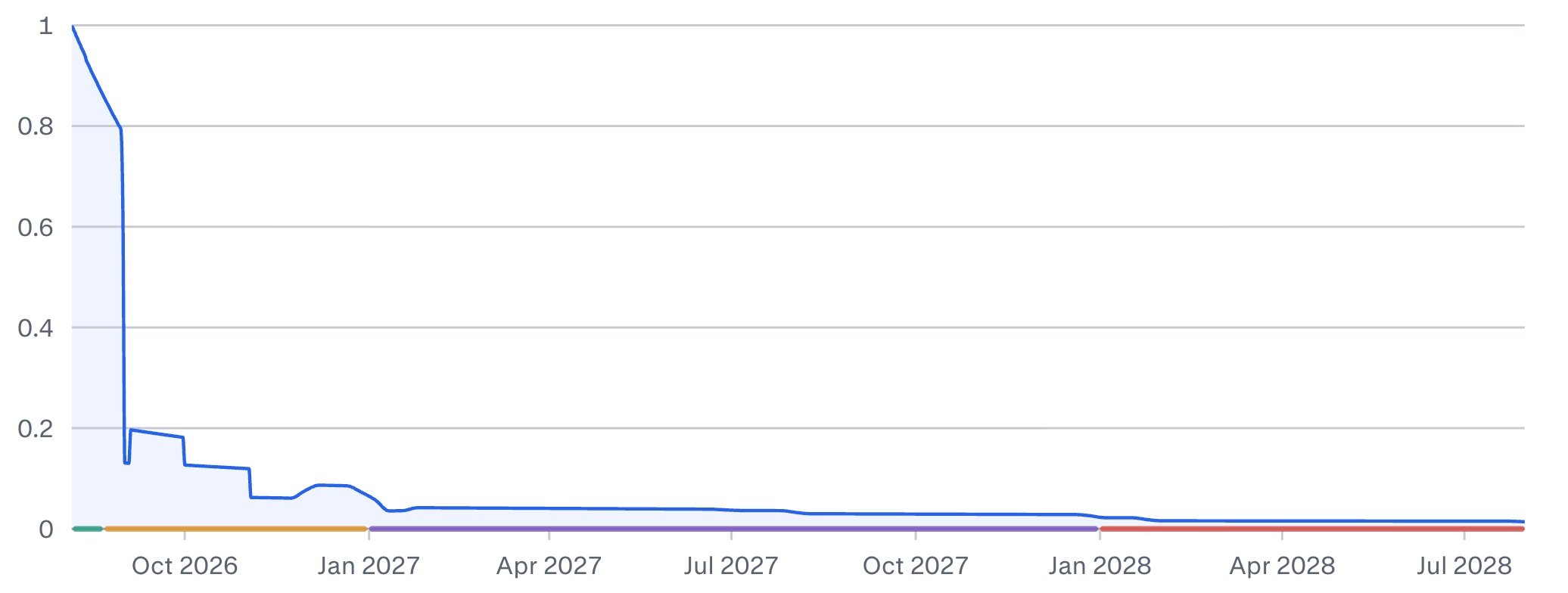
My 25th percentile prediction for Safe Superintelligence (SSI) to release its first AI model is 13th October 2026.
I based this timeline on investor reports from August 2026 regarding a planned summer or autumn release, but I have pushed the prediction to October to account for standard technical slippage and safety red-teaming common in frontier model development.
I have integrated the 5 billion dollar investment from Nvidia and the Q3 2026 production timeline for the Vera Rubin hardware into my forecast, as these represent the primary logistical constraints for a public launch.
I predict that Ilya Sutskever’s July 2026 confirmation of research worthy of scaling up suggests the firm has reached a maturity level that permits a public demonstration, even as they maintain a straight shot strategy that avoids typical commercial APIs.