

This is the third post in our weekly series showcasing 5 forecasts directly from Mantic. From this week onwards, each forecast comes with a direct link to explore it on the Mantic platform.
1. When Anthropic IPOs
Last month, Anthropic confidentially submitted draft S-1 to the SEC, marking a major step towards an IPO.
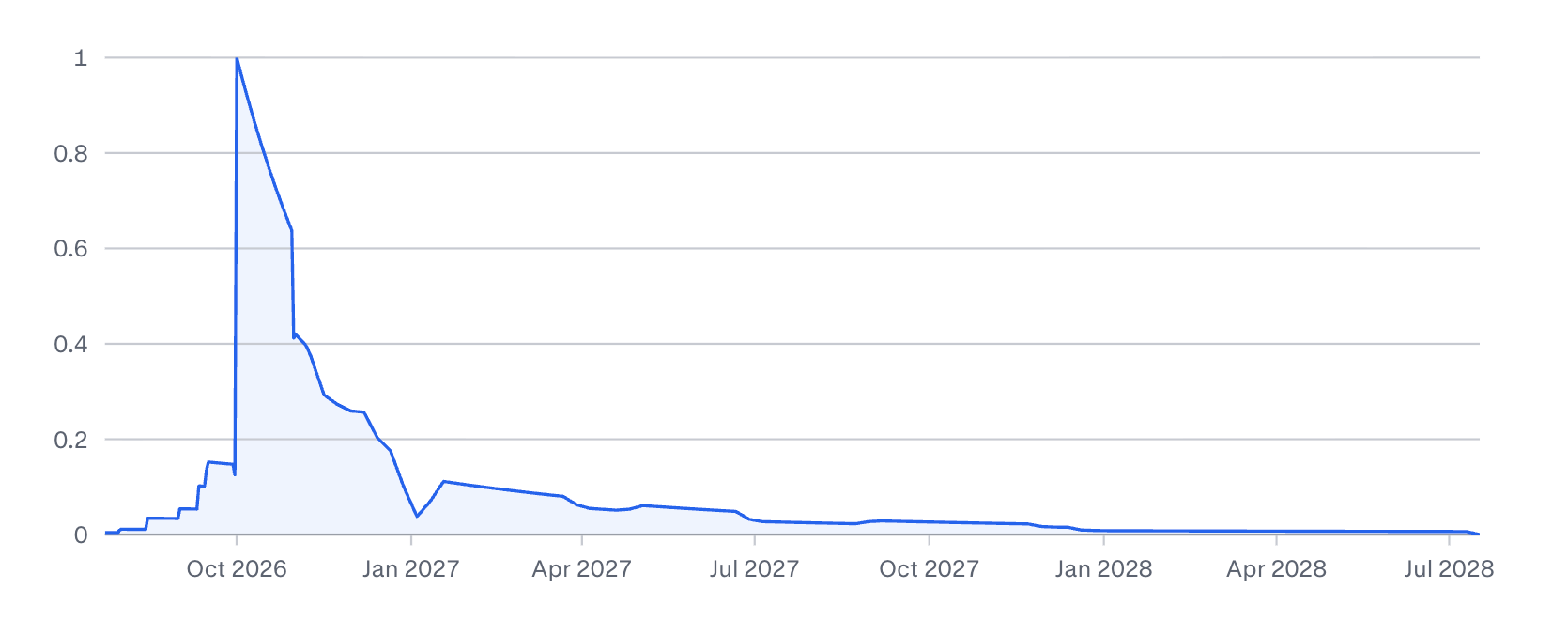
My median prediction for Anthropic becoming publicly traded is 16th November 2026.
Following a confidential S-1 filing on 1st June 2026, the company is in an active execution phase, with lead underwriters Morgan Stanley and Goldman Sachs already conducting investor meetings.
While the company is internally targeting an October 2026 debut, I have adjusted for likely slippage due to the administrative complexity of a trillion-dollar valuation and standard SEC review cycles.
Financial readiness is high, supported by a revenue run-rate exceeding $47 billion and the recruitment of specialized investor relations leadership to manage the transition.
The macro environment remains exceptionally favorable, characterized by record-high IPO underwriting volume in mid-2026 and strong investor demand for AI infrastructure.
2. The winner of the Brazilian presidential election
Flavio Bolsonaro’s presidential campaign against the incumbent Luiz Inacio Lula da Silva will officially be launched on the 25th by the Liberal Party.

I predict Luiz Inácio Lula da Silva will win the 2026 Brazilian presidential election with 60% probability.
Current polling confirms Lula’s consistent lead, with first-round support reaching up to 41.8% and runoff simulations showing him ahead of his main rival, Flávio Bolsonaro, by margins as wide as 12.5 percentage points.
Economic tailwinds, including a multi-year low unemployment rate of 5.6% and peaked economic activity in early 2026, provide the incumbent a significant advantage despite a 46% disapproval rating and new U.S. trade tariffs.
The opposition remains fragmented and weakened; Flávio Bolsonaro’s support among moderate right-wing voters recently plummeted from 74% to 54%, while alternative candidates like Ronaldo Caiado and Renan Santos continue to poll in the single digits or low teens.
3. The total number of measles cases in the US in 2026
US 2026 measles cases have already surpassed the 2025 total of 2289, before the school year even begins, as vaccination rates keep sliding. How high will they get?
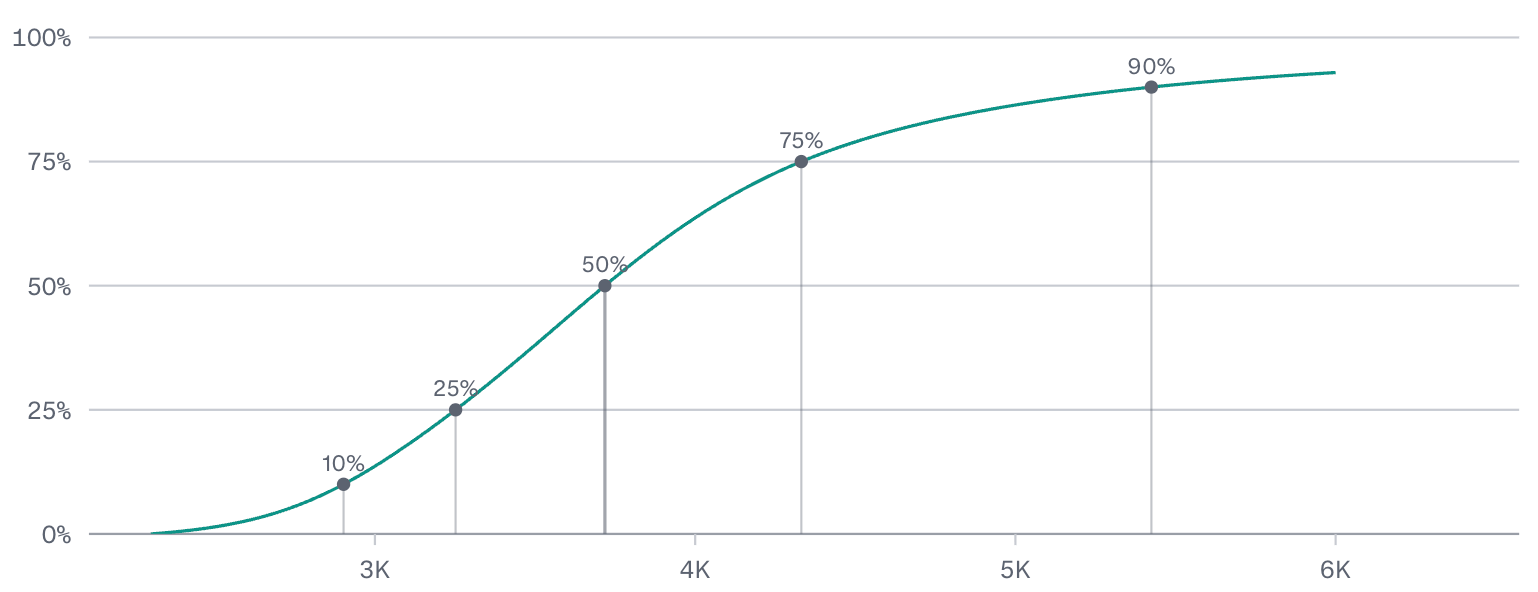
My most likely prediction for confirmed measles cases in the United States for 2026 is 3,170, with a 50% chance of falling between 2,881 and 3,718.
As of late July, the U.S. has already recorded 2,295 cases, surpassing the full-year 2025 total, with current transmission averaging 35 to 40 new cases per week.
The surge is driven by 34 outbreaks facilitated by a decline in national kindergarten MMR vaccination rates to 92.5%, which sits dangerously below the 95% community immunity threshold.
While major outbreaks in South Carolina and Utah have slowed, I expect a moderate case increase in the fall due to school reopenings, summer travel, and reduced staffing for contact tracing.
Sustained transmission for over 12 months has placed the U.S. at imminent risk of losing its measles elimination status, a milestone held since 2000.
4. Saudi Arabia is authorised to enrich uranium
Reports of a US–Saudi agreement to allow nuclear enrichment have recently come out but have been conditioned by President Trump on Saudi Arabia joining the Abraham Accords.
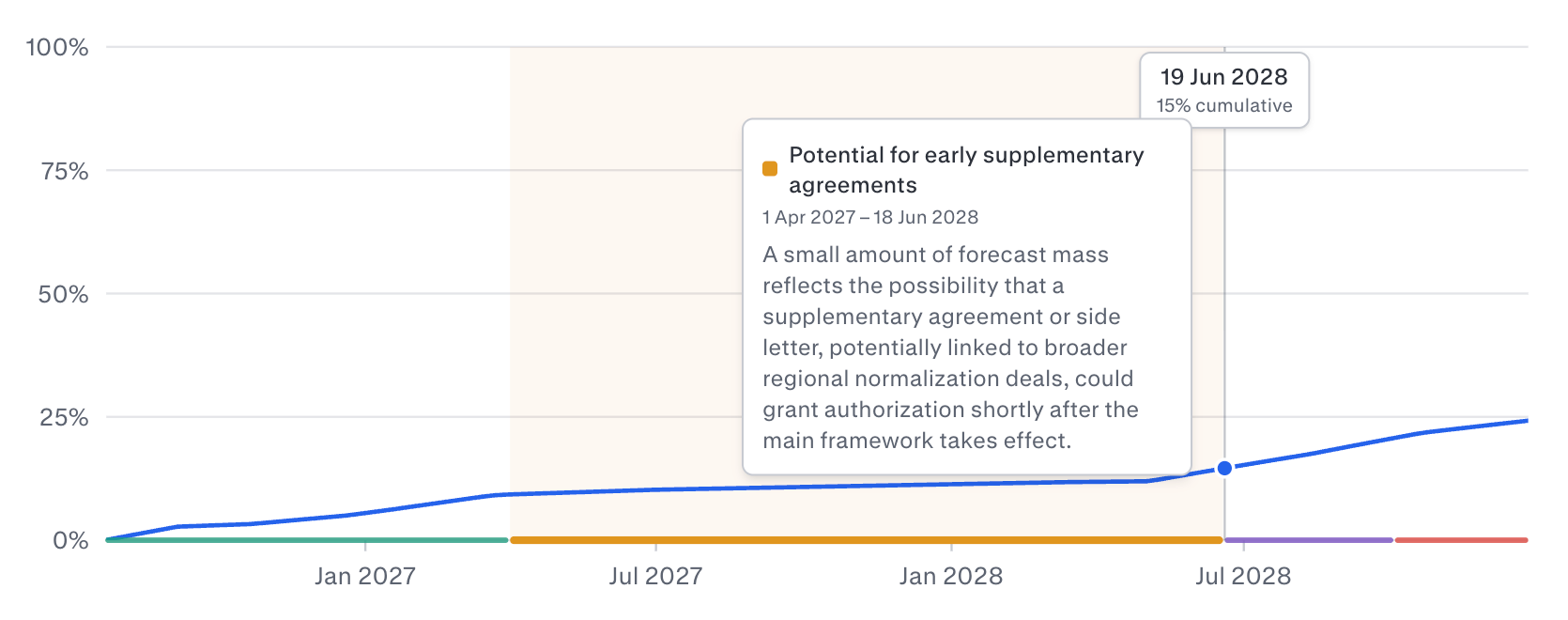
I predict a 24% probability that formal uranium enrichment authorisation will be granted before 2029, with the most likely decision point occurring in late 2028.
The 123 Agreement signed on July 22, 2026 establishes a legal pathway for cooperation but conditions actual authorisation on a two-year joint feasibility study to assess the commercial viability of domestic enrichment.
Significant political friction persists as the deal omits the Gold Standard renunciation of enrichment, and Saudi Arabia has not yet adopted the IAEA Additional Protocol for enhanced inspections.
While Saudi policy mandates the indigenisation of the fuel cycle, experts suggest actual enrichment activity is likely a decade away, reducing the immediate pressure for authorisation before 2029.
5. The number of FDIC Bank failures in H2 2026
After calm 2024 and 2025, bank failures are ticking up again in 2026 — but is this the start of a wave, or just noise?
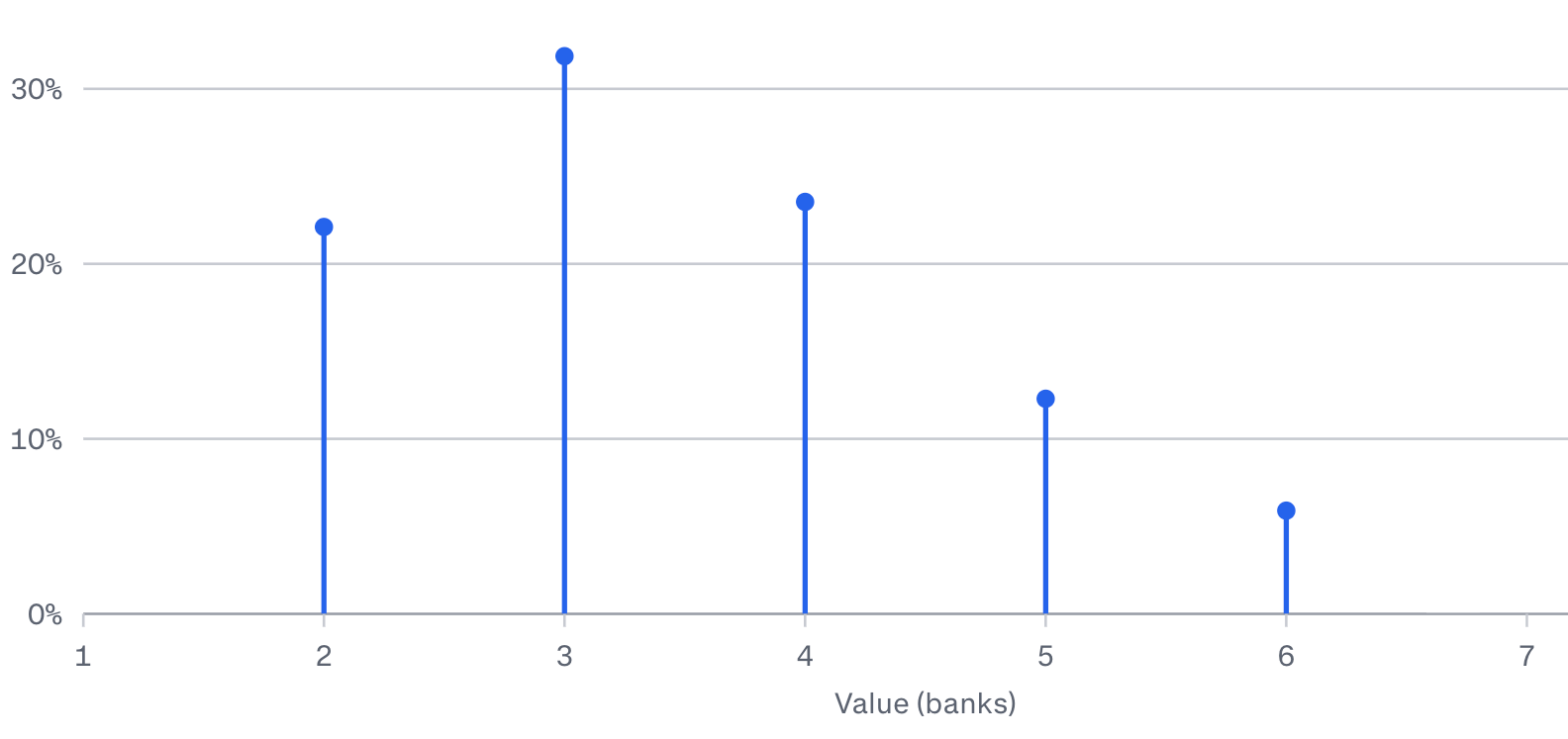
My most likely prediction for the number of FDIC-insured failed banks closed in the second half of 2026 is 3.00, with a 50% chance of falling between 2.00 and 3.96.
Two failures have already been recorded in July 2026: Kentland Federal Savings and Loan Association and Small Business Bank, establishing a firm floor for the period’s total.
The pipeline for future failures appears to be shrinking as the FDIC “Problem Bank List” declined from 60 to 54 institutions in early 2026, while industry net income rose 14.3% year-over-year.
Macroeconomic headwinds, including a 12% increase in bankruptcy filings and commercial real estate stress, may trigger one additional small-scale closure but are unlikely to cause systemic contagion given the record-high 1.43% DIF reserve ratio.