


This is the first post in our new weekly series showcasing 5 forecasts directly from Mantic.
1. The number of US job cuts attributed to AI in 2027
Fears about AI job displacement have been increasing in the last few years but seem to finally have some solid footing with more layoffs attributed to AI in 26H1 than in the full year 2025. Will next year maintain the acceleration?
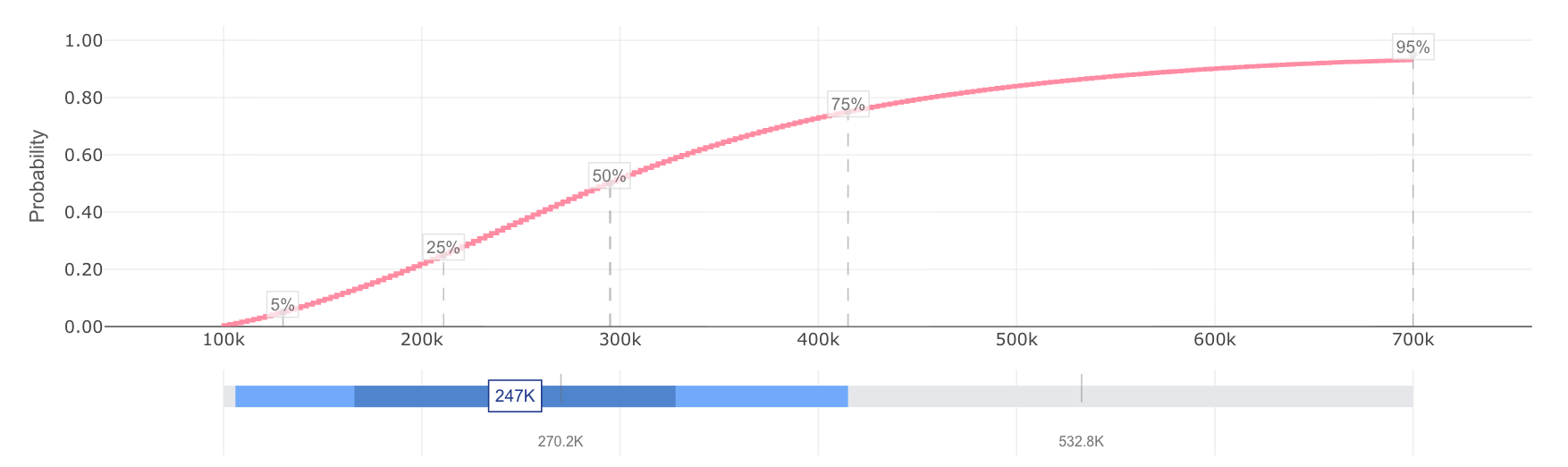
My most likely prediction for US job cuts attributed to AI in 2027 is 247,000, with a 50% chance of falling between 166,000 and 328,000.
This forecast is driven by an unprecedented acceleration in 2026, where AI-attributed layoffs reached 101,743 in the first half of the year alone, representing a 23% share of all US job cuts. The shift from experimental to structural AI-driven restructuring is evidenced by major firms like Oracle and Meta redirecting capital from human labor to AI infrastructure.
2. The winner of the 2027 French presidential election
On July 7, the Paris Court of Appeal overturned Marine Le Pen’s ineligibility.
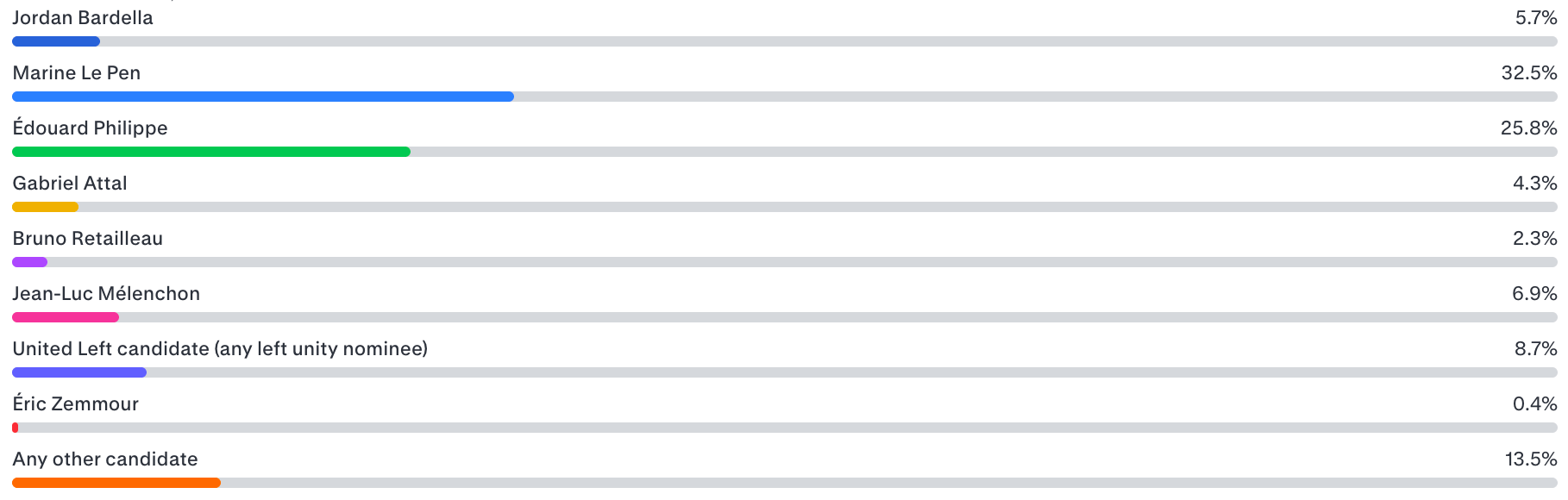
I predict Marine Le Pen has a 33% probability of winning the 2027 French presidential election.
Her candidacy is bolstered by a July 2026 court ruling that effectively cleared her legal path to run, followed by immediate polling dominance at 34-36% in the first round.
Economic tailwinds for the far-right include a high 5.1% deficit and low consumer confidence (84 points), which together foster an anti-incumbent environment that penalizes centrist “heirs” like Edouard Philippe.
While the “Republican Front” tactical voting strategy has historically blocked the far-right, polling now shows its efficacy at a historical low, with Le Pen leading Philippe 51-54% in potential runoff matchups.
3. Iranian crude production in August
After the Memorandum of Understanding collapsed and strikes resumed this week, the market’s real question isn’t the politics but the availability of Iranian barrels. Will the Iranian crude actually reach buyers, or vanish again?
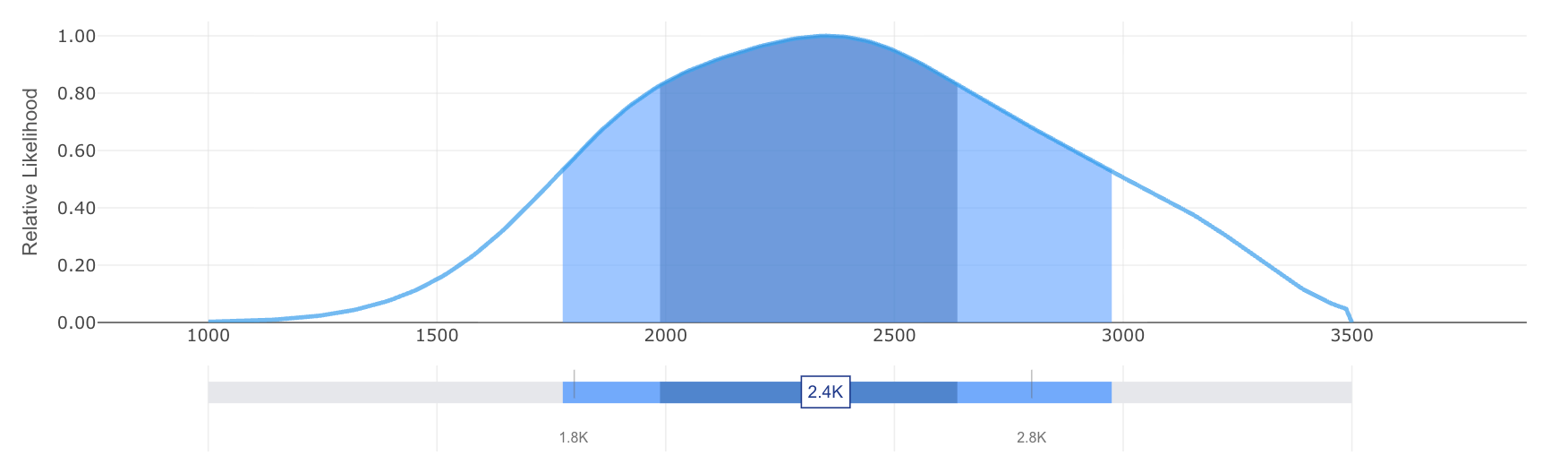
I predict Iran’s crude oil production in August 2026 will be 2,912.50 tb/d, with a 50% chance of falling between 2,712.50 and 3,112.50 tb/d.
The recovery is driven by the late June lifting of the U.S. naval blockade and a 60-day sanctions waiver that has cleared massive domestic storage bottlenecks, allowing for the aggressive restart of shut-in wells.
Production is unlikely to reach the pre-war baseline of 3,241 tb/d due to estimated infrastructure damage of up to $19 billion and the technical ‘slow grind’ associated with restoring complex maritime platforms.
4. When Israeli forces withdraw from Lebanon
President Trump has said Israeli forces will leave Lebanon but signals from Jerusalem are mixed, making it the key unknown for whether the regional escalation is winding down or escalating again.
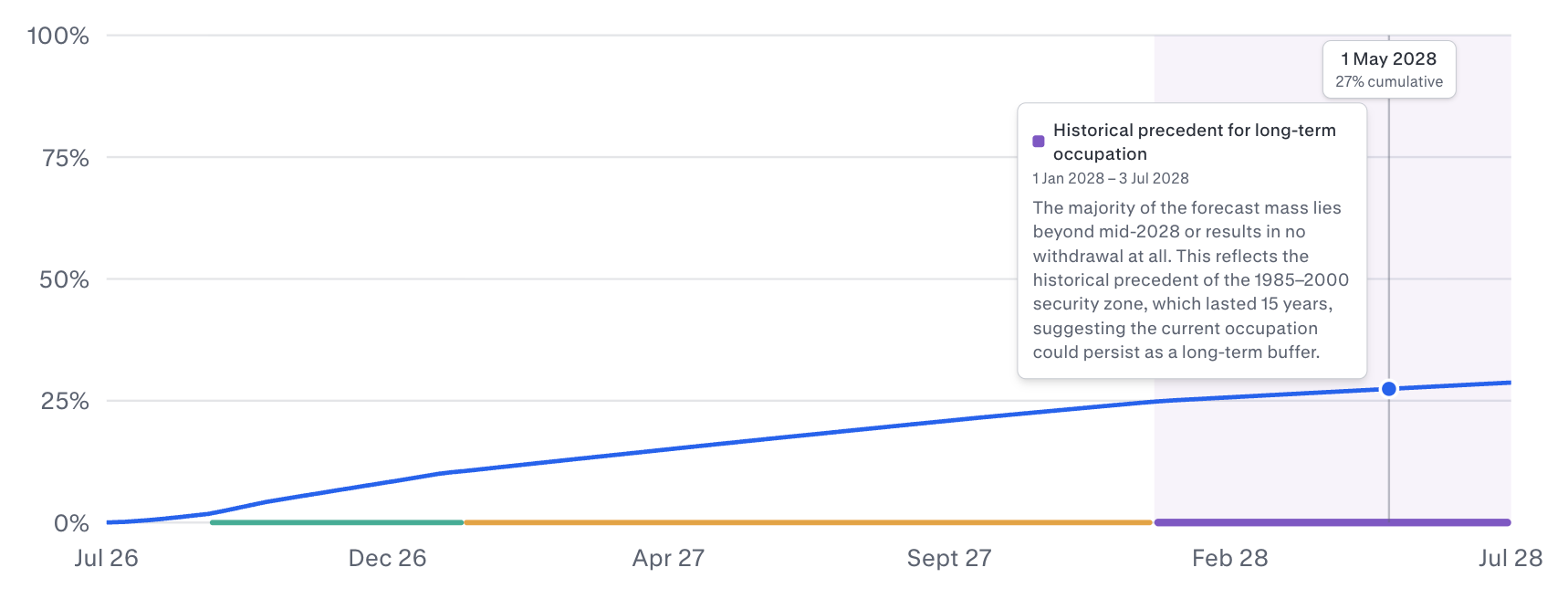
Israeli leadership has institutionalized an indefinite presence within a 10-kilometer security buffer, stating that troops will remain until Hezbollah is fully disarmed and displaced residents return to northern Israel.
The 2026 U.S.-brokered framework agreement is effectively frozen due to Hezbollah’s refusal to disarm and the Lebanese Armed Forces’ inability to provide security guarantees following a 98 percent depreciation in real salary value.
Historical precedent suggests long-term occupation; the previous Israeli security zone in southern Lebanon lasted 15 years, and current entrenchment—including village demolitions—points toward a multi-year timeline.
5. When the SEC adopts a final rule on semiannual reporting
A political push to reduce quarterly reporting to semi-annual has run into strong pushback, notably from retail investors. Will the SEC listen to their demands or move with the change?
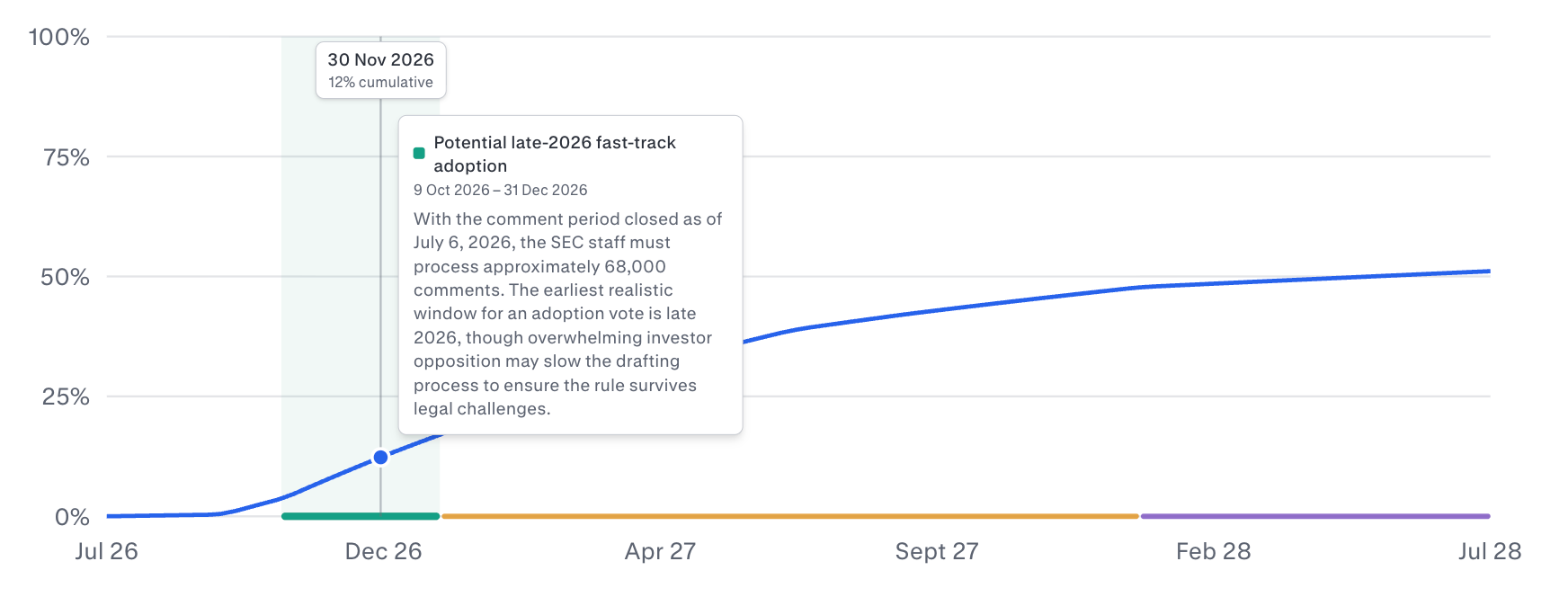
I predict a 4% probability that the SEC will adopt a final rule for semi-annual reporting by the October 9, 2026 deadline.
The SEC must process 68,000 public comments, with 99% in opposition, requiring a legally defensible record under the Administrative Procedure Act that typically takes 6-12 months to finalize.
Intense pushback from major institutional investors like BlackRock and Vanguard, alongside the SEC’s own Investor Advisory Committee, necessitates a robust and time-consuming economic analysis to survive certain litigation.
While the 3-0 Republican majority and the White House strongly support the shift to reduce $330,000 in annual compliance costs per firm, the 95-day window from the close of comments is mechanically insufficient for a final vote.